Technical note
Check valve types: swing, dual-plate and axial — where each fits
· 8 min read · Iron Valves Technical Team
A check valve has one job: allow flow in one direction and close, by itself, when flow reverses. How it closes determines whether it protects the pump and the piping or slams into them. Oil and gas specifications therefore spend as much time on check-valve type as they do on class and material. The three types that appear most often on process and pipeline datasheets are swing checks, dual-plate (double-door, wafer) checks and axial — sometimes called nozzle — checks.
Swing check valves
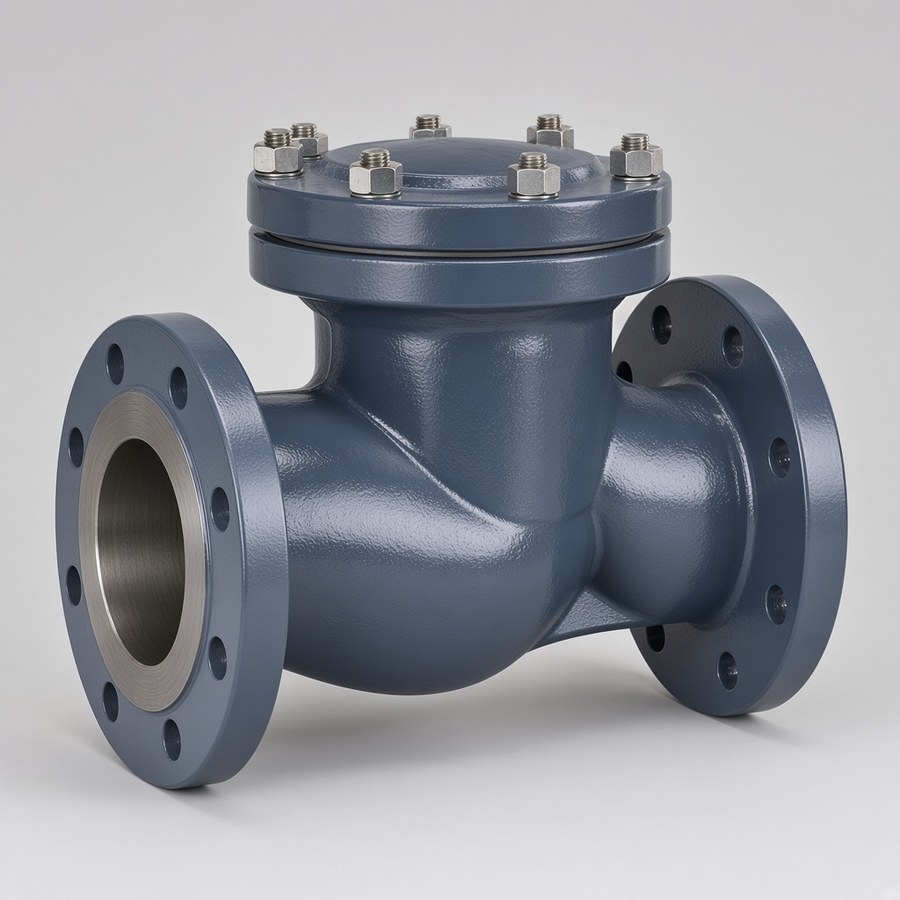
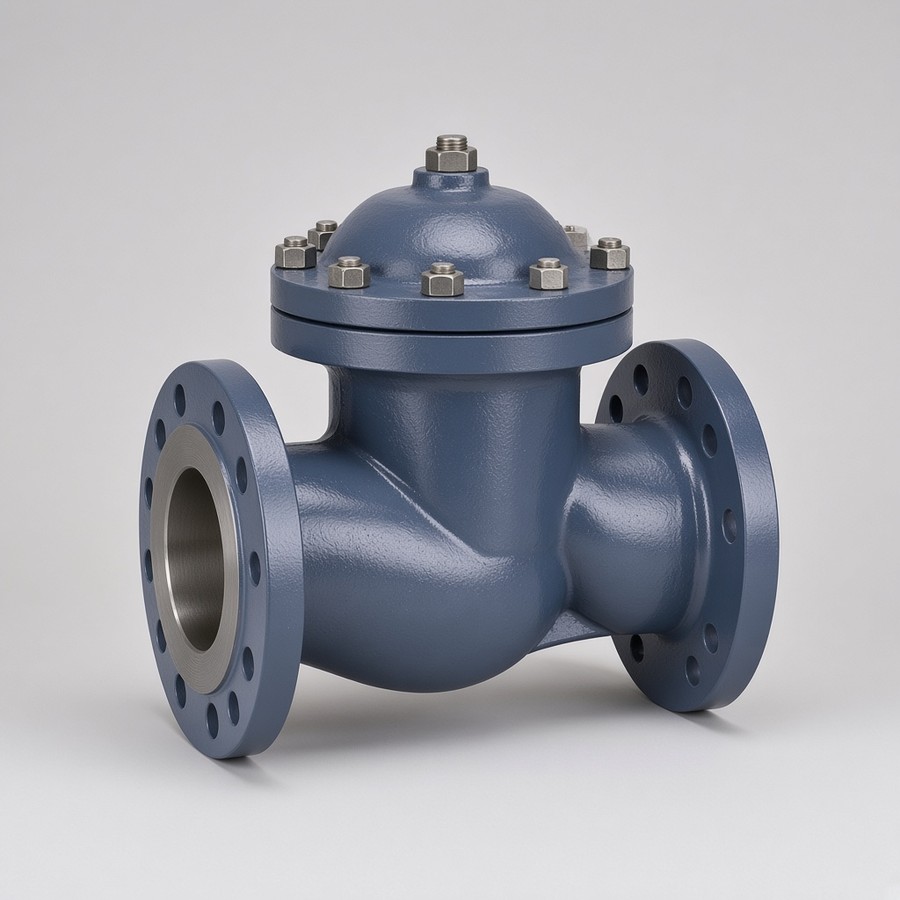
A swing check hangs a disc from a hinge so that forward flow lifts the disc and reverse flow seats it. The flow path is relatively open, so pressure drop is modest and debris tolerance is better than in many spring-assisted designs. Closure, however, depends on reverse flow and gravity (or a small assist). In a system that decelerates quickly — a pump trip on a short discharge line, for example — the disc can still be wide open when reverse flow begins, and it then slams shut. That slam is noisy, it hammers the seat and it sends a pressure wave into the piping. Swing checks are a good fit on systems with slow flow reversal, long discharge lines, or where a full-opening, piggable or near-full-bore path is required.
An API 6D swing check valve is the usual pipeline form: a bolted cover, a robust hinge and testing to API 6D. Process plants also use swing checks to BS 1868 or API 594 patterns, including the cast steel check valve and the smaller API 602 forged steel check valve. Installation orientation matters. A swing check is happiest in horizontal pipe; vertical up-flow is possible on some designs, vertical down-flow generally is not. Always follow the manufacturer’s allowed orientation rather than assuming.
Dual-plate check valves
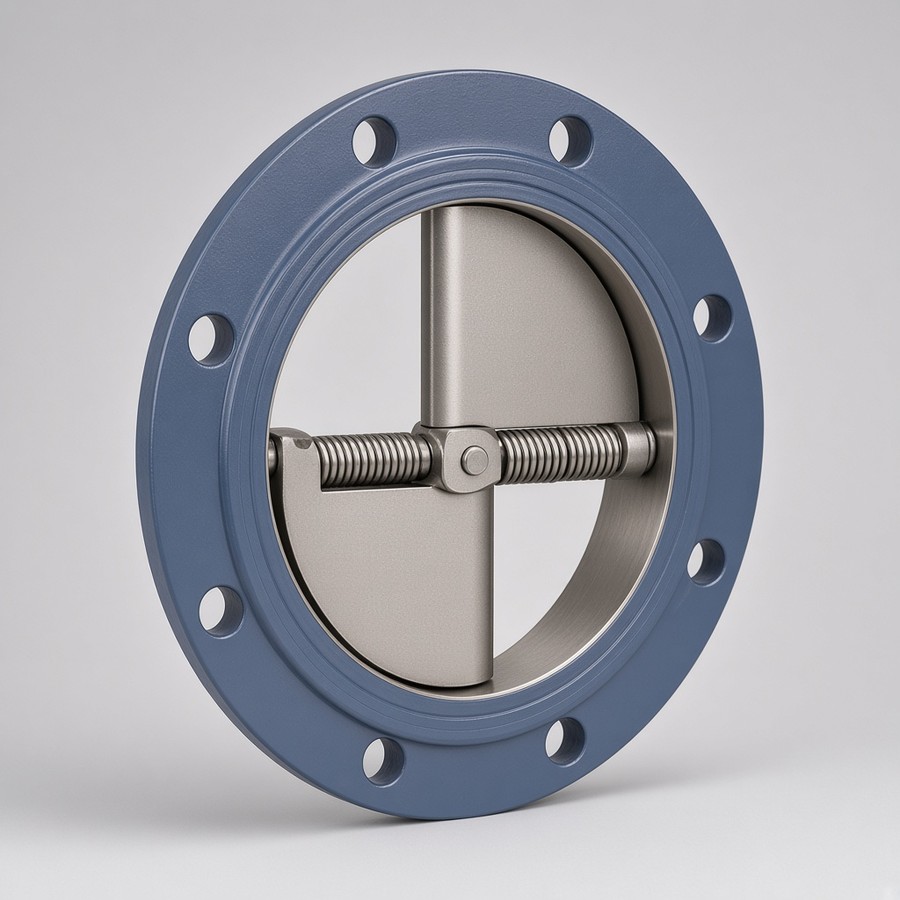
A dual-plate check valve places two spring-loaded semicircular plates in a short wafer or lug body that fits between flanges. The springs start the plates closing as soon as forward velocity falls, so the valve is less dependent on reverse flow to finish the job. The result is a shorter installation length, lower weight and typically less slam than a swing check of the same size. The trade-offs are a somewhat higher pressure drop, spring and plate components in the flow, and less tolerance for dirty service or for long-term spring fatigue if the selection is careless.
An API 6D dual-plate check valve (and the related API 594 wafer dual-plate pattern used in process and HVAC service) is the default compact non-return valve on many pump discharges, compressor utilities and tight pipe racks. Because the body is short, it is easy to drop between existing flanges when replacing a bulkier check — provided the faces, class and gasket standard match. Springs and plate stops should be specified in materials that suit the fluid; sour and corrosive services in particular need that written down, not left as a catalogue default.
Axial (nozzle) check valves
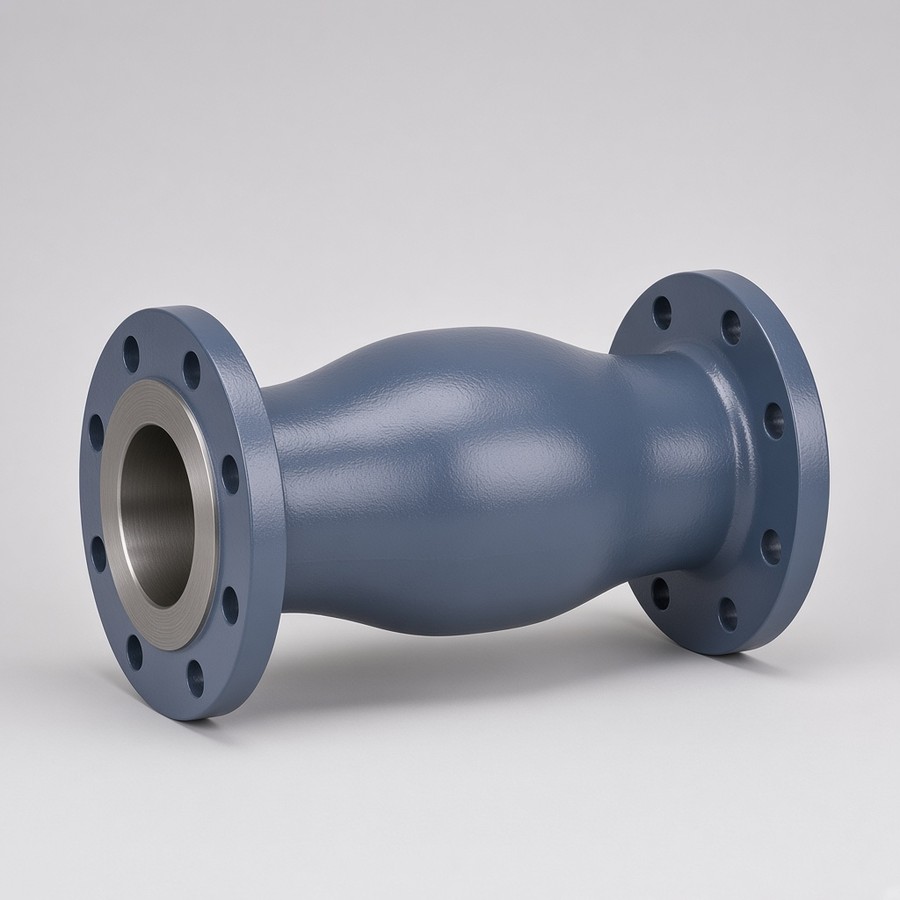
An axial, or nozzle, check valve moves a disc along the pipe axis, guided and spring-assisted, so that the flow path stays streamlined and the disc travel is short. The disc is already moving closed as flow decays, which is why this type is widely specified where slam cannot be tolerated: compressor discharge, certain pump discharges, flowlines with fast transients, and systems that have already suffered check-valve hammer. Pressure drop can be lower than a dual-plate in a well-designed nozzle body, and the dynamic response is the point of the product. The cost and the laying length are higher than a wafer dual-plate, and the internals need a manufacturer who actually designs for the dynamic case rather than stretching a catalogue spring.
The API 6D axial (nozzle) check valve is the form to call up when a dynamic study, a compressor vendor or a piping specification has named a non-slam axial check. Do not substitute a dual-plate “because it also has springs” without engineering agreement; the closing characteristic is not the same.
Selecting among the three types
A short selection guide: if the line is a pipeline or a slow-reversing gravity or long-discharge system and you want a simple, full-opening valve, start with a swing check. If you need a compact, lighter valve between flanges and a moderate improvement in closing response, start with a dual-plate. If slam, compressor discharge or a fast transient is the design case, start with an axial check and be prepared to share the flow data the manufacturer needs. In every case name the design standard (API 6D, API 594, BS 1868), the end connections, the class, and whether the valve must sit in horizontal or vertical pipe.
Iron Valves supplies all three types from qualified manufacturers. Send the duty — fluid, size, class, orientation, and whether slam has been identified as a risk — and we will match a manufacturer option to that datasheet. Test records follow API 6D or API 598 as specified. Certifications are those of the manufacturing plant.
Written by the Iron Valves Technical Team. Products mentioned are supplied to the stated standards from qualified manufacturers; certifications are those of the manufacturing plant.