Technical note
Gate vs globe vs ball valves for oil and gas service
· 8 min read · Iron Valves Technical Team
Most oil and gas piping classes are built from three isolation families: gate, globe and ball. Each can shut a line. Each does so with a different motion, a different pressure drop and a different set of things it should never be asked to do. Getting the family right is as important as getting the material and class right — a beautifully documented valve in the wrong family still fails the process.
Gate valves
A gate valve lifts a wedge or slab out of the flow. When it is open the bore is essentially full, so permanent pressure drop is low and pigs can pass on through-conduit designs. That makes gates the traditional isolation valve on steam, high-temperature process and many pipeline services. They are slow to operate compared with a quarter-turn valve, which is often an advantage when water hammer or slamming is a concern. They are not throttling valves. A partially open wedge sees high velocity at the seating faces and will wear, vibrate or cut itself out of tightness. If the datasheet says “regulate”, a gate is the wrong family.
An API 600 cast steel gate valve is the workhorse of process isolation in larger sizes, built to the API 600 / ISO 10434 bolted-bonnet, outside-screw-and-yoke pattern. Smaller high-pressure or compact installations more often take an API 602 forged steel gate valve. Pipeline service that must remain piggable uses an API 6D through-conduit gate valve rather than a wedge gate. Wellhead trees use an API 6A wellhead gate valve, which is a different design code entirely and should not be substituted from an ASME-class process catalogue.
Globe valves
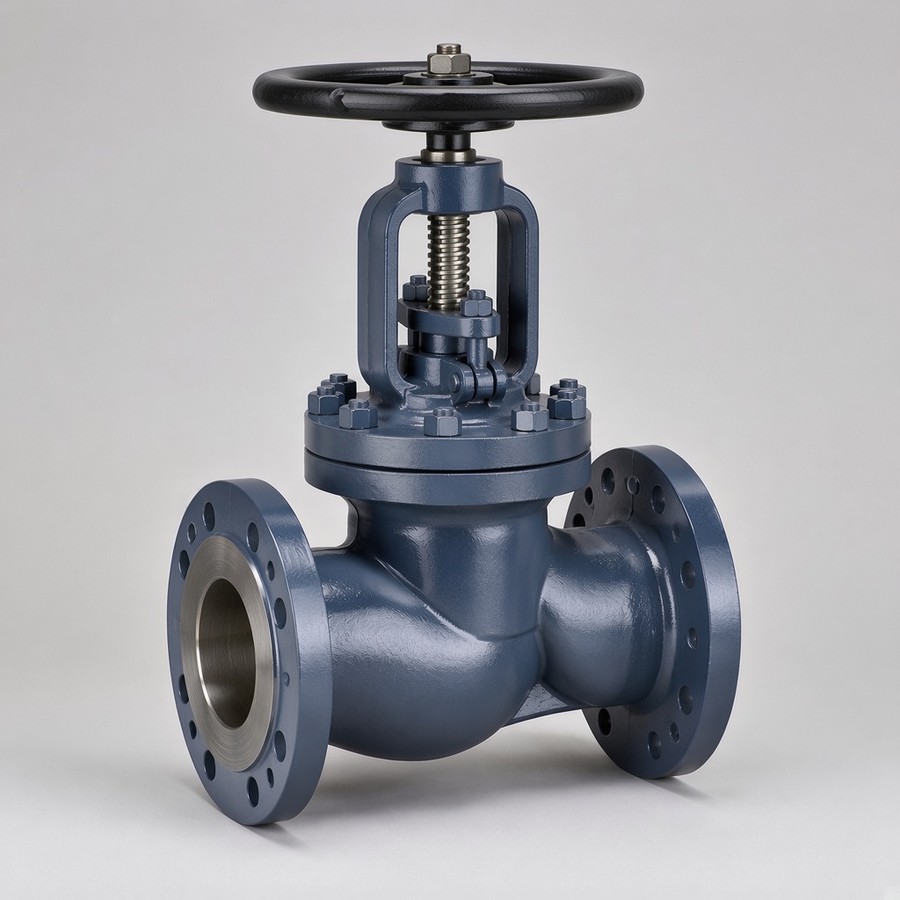
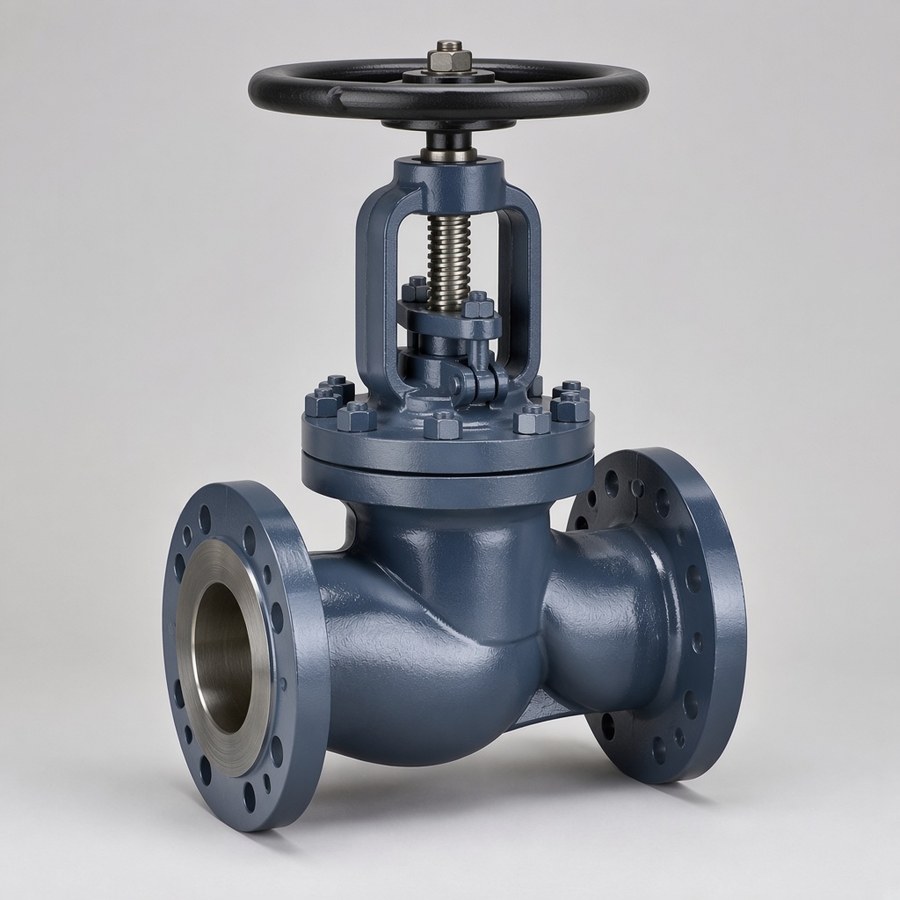
A globe valve moves a disc onto a seat roughly in line with the stem, forcing the fluid through an S-shaped or angled path. That geometry creates a permanent pressure drop — the price paid for a controllable, repeatable opening. Globes are the correct family for throttling, bypass, vent, drain and many start-up lines where the operator needs to meter flow rather than merely shut it off. A cast steel globe valve to API 623 covers the larger process sizes; an API 602 forged steel globe valve covers the smaller high-pressure and instrument-adjacent lines.
Ball valves
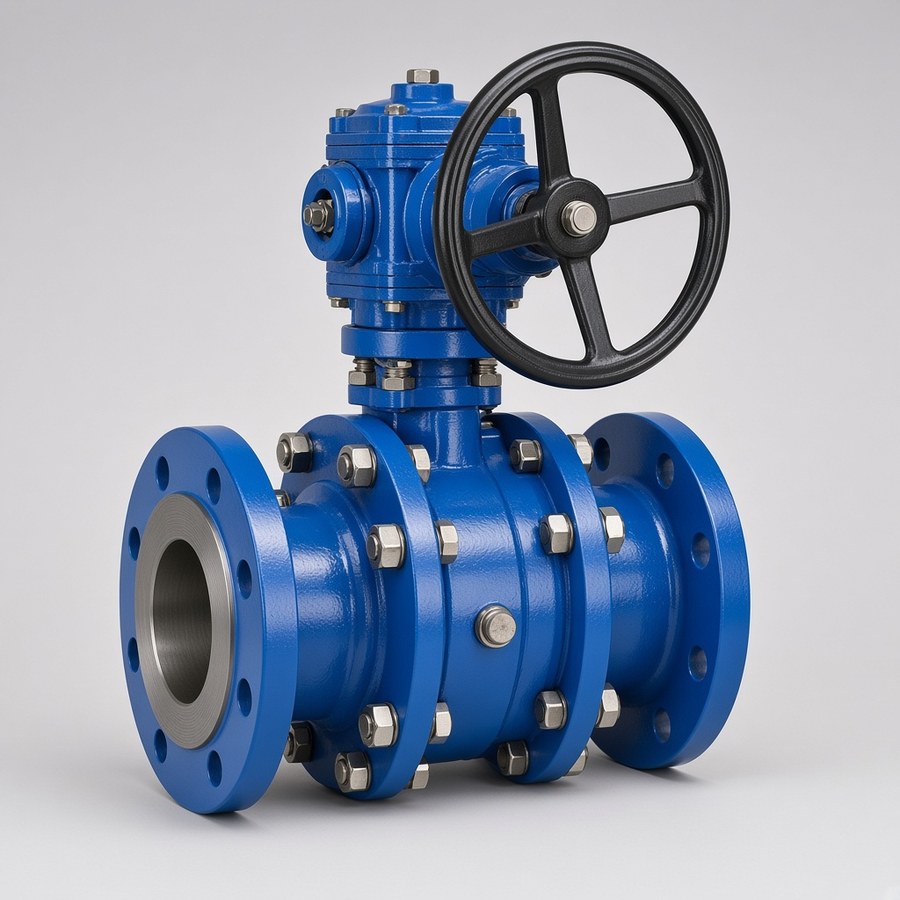
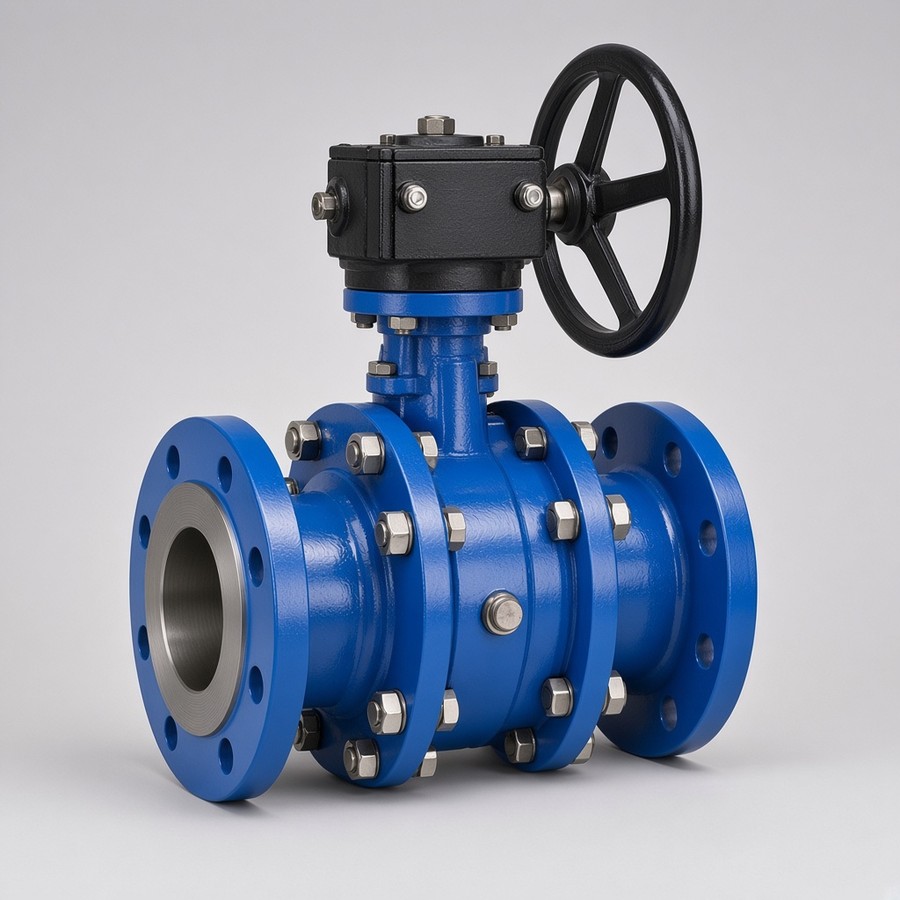
A ball valve rotates a bored sphere a quarter turn. Open, the pressure drop of a full-port ball is comparable to a similar length of pipe; closed, the seats (soft or metal) provide tight shut-off. Operation is fast, which is useful for emergency isolation and for actuated packages, and less ideal if a slow closure is needed to protect the piping from surge. Balls are isolation valves first. Standard soft-seated balls should not be used to throttle: the seat sees the high-velocity edge of the ball and degrades. Characterised or V-port balls exist for control duty, but that is a different specification and should be written as such.
On pipelines, the isolation ball is typically an API 6D trunnion-mounted ball valve. Inside a process unit, an API 608 process ball valve is usually the match. Both can be specified fire-safe to API 607 or API 6FA and with ISO 15848 packing where the manufacturer offers those options. Actuated on/off packages are common on both families when the plot plan or a safety function requires it.
A practical selection sequence
A practical selection sequence for an oil and gas line is: first, is the duty isolation or throttling? Throttling points to a globe (or to a dedicated control valve, which is outside this comparison). Second, does the line need a full piggable bore or the lowest possible pressure drop at large diameter? That points to a through-conduit gate or a full-port pipeline ball. Third, is speed of operation, compact layout or easy actuation important? That points toward a ball. Fourth, what does the project specification already name — API 600, 602, 608, 6D or 6A? Stay inside that name unless engineering has formally changed the piping class.
Temperature, media and leakage class finish the picture. High-temperature steam still leans toward gates and globes with metal seats and graphite packing. Hydrocarbon liquids and gases at moderate temperature are well served by fire-safe balls. Sour service, cryogenic duty and slurry each add their own trim and sealing rules; they do not change the basic family choice, but they do change the manufacturer and the documentation you should ask for.
Iron Valves supplies all three families from qualified manufacturers against the stated API, ASME and ISO standards. When you send an RFQ, name the family if the piping class already has one, and describe the duty if it does not: isolate or throttle, piggable or not, manual or actuated, and any fire-safe or low-emission requirement. We will match a manufacturer option to that datasheet. Certifications remain those of the manufacturing plant.
Written by the Iron Valves Technical Team. Products mentioned are supplied to the stated standards from qualified manufacturers; certifications are those of the manufacturing plant.